Blog
Jori VanAntwerp
For over two decades, Jori has enabled industrial and IT organizations to be successful in reducing risk, increasing compliance, and improving their overall security efforts. He has had the pleasure of working with companies such as Gravwell, Dragos, CrowdStrike, FireEye, McAfee, and is now CEO & Founder at EmberOT, a cybersecurity startup focused on making security a reality for critical infrastructure.
Deep knowledge of your own plant is the strongest advantage in OT. The best teams share it, and grow stronger for it.
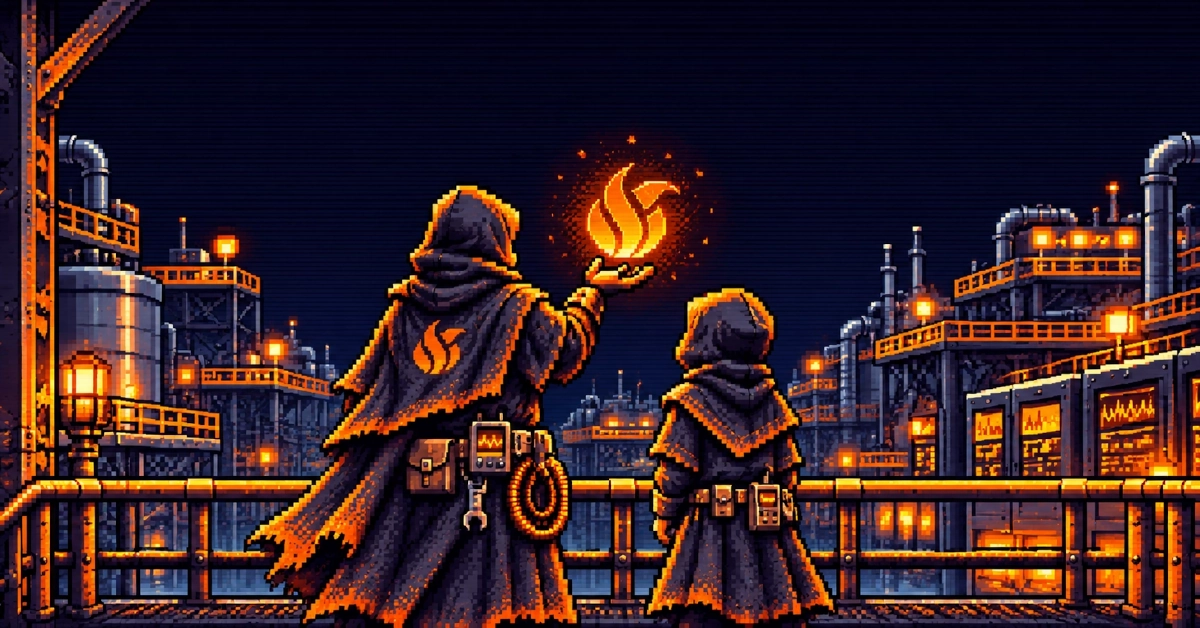
Luke becomes a Jedi for one reason: two masters invested everything they knew in him. Obi-Wan and Yoda both spent their final years as teachers, investing in the future. The whole Jedi saga turns on that choice to pass the craft forward. Yoda says it plainly. “Pass on what you have learned.”
That instinct, the veteran who builds up the next generation, is one of the most powerful things you can bring to an OT program. I have spent a lot of years around plant floors, and the teams that run the best are almost always the ones where the senior people treat teaching as part of the job.
Deep Knowledge Is the Advantage
The SANS 2026 State of ICS/OT Security Survey put it well through its author, Jason Christopher: the organizations that understand their own systems best are the ones most likely to get through a hard day (SANS). Understanding your own plant, deeply and specifically, is the real edge, and the people who have it are your most valuable asset.
OT makes that knowledge especially deep, and especially personal. These systems are built to run for fifteen to thirty years, and every environment is its own work of art. Same building blocks, assembled for one specific function, a specific physical space, a specific set of constraints, then tuned by hand over decades. You learn a plant like that by living with it, year after year.
Think about what that expertise actually contains. Why a controller is configured in a way that only makes sense once you know this process. Which alarm is routine noise and which one deserves someone walking out to the floor. What the line sounds like when it is running well, and the faint change in rhythm that is worth a quiet look. That understanding is earned one incident and one strange Tuesday at a time, and it is worth its weight in gold. The person who holds it is a teacher you are lucky to have.
Expertise Grows When You Share It
The strongest OT teams spread that expertise around on purpose, because it gets more powerful when they do. A plant where several people deeply understand the process is more capable on any given day, more confident heading into a planned outage, and frankly more fun to work in.
The investment shows up in the numbers. In the same SANS survey, the organizations that build resilience into how they operate and practice it regularly were far more likely to recover fast: 46% could restore their most critical system within a day, against 27% across all respondents (SANS). Capability you have deliberately built, and deliberately shared, is what carries a team through. Most of this costs very little. What it takes is intention, and a senior group that takes pride in bringing people up.
How the Best Teams Pass on What They Have Learned
Teach the reasoning behind the work. An expert is made by understanding why: why the sequence runs in this order, what the quirk in panel three is really telling you, the hard-won “here is why we always do it this way.” Capture that reasoning in writing where you can, and say it out loud where you cannot, so the next person learns to reason the way you do. Make your thinking visible every chance you get.
Build real depth on the things that matter. For every critical system and every critical call, grow a second person who can own it with genuine confidence. Give them the real reps: let them lead the next maintenance window and make the call on the next odd reading, with the veteran beside them to coach. Two experts are stronger than one, and the second one often notices things the first stopped seeing years ago.
Make mentorship part of the routine. The best teaching happens on ordinary days, in the flow of normal work. Shadowing on a normal shift. Walkthroughs of the parts of the plant people rarely touch. Incident debriefs where the senior person talks through their reasoning out loud, so everyone in the room learns how an expert actually thinks a problem through. Small, regular moments of passing it on compound into a team that gets measurably better every quarter.
Give newcomers a head start. A big part of mastery is knowing how the environment behaves: what talks to what, what normal looks like, which connections are expected and which are new. Visibility into your own network, whoever you get it from, puts a lot of that picture in front of a newcomer on day one. It turns months of quiet observation into something they can see and ask about right away, so they can spend their energy on the deeper craft from the start.
You’ve Got This
Luke carried the Jedi forward because someone invested and believed in him. Your veterans can do the same, and the payoff is a team full of people who understand the plant and love the work, the kind of team that handles a hard day without breaking a sweat and gets a little better every year.
The expertise in your OT workforce is the most valuable thing you have, and the best part of knowledge is that sharing it makes it grow. Pass on what you have learned, and build the people around you into the experts your plant will count on for the next twenty years. That is how the craft continues, one Jedi Master and one Padawan at a time.
The Force is with you, always.
~Jori 🤘🔥
Become a Subscriber
EMBEROT WILL NEVER SELL, RENT, LOAN, OR DISTRIBUTE YOUR EMAIL ADDRESS TO ANY THIRD PARTY. THAT’S JUST PLAIN RUDE.