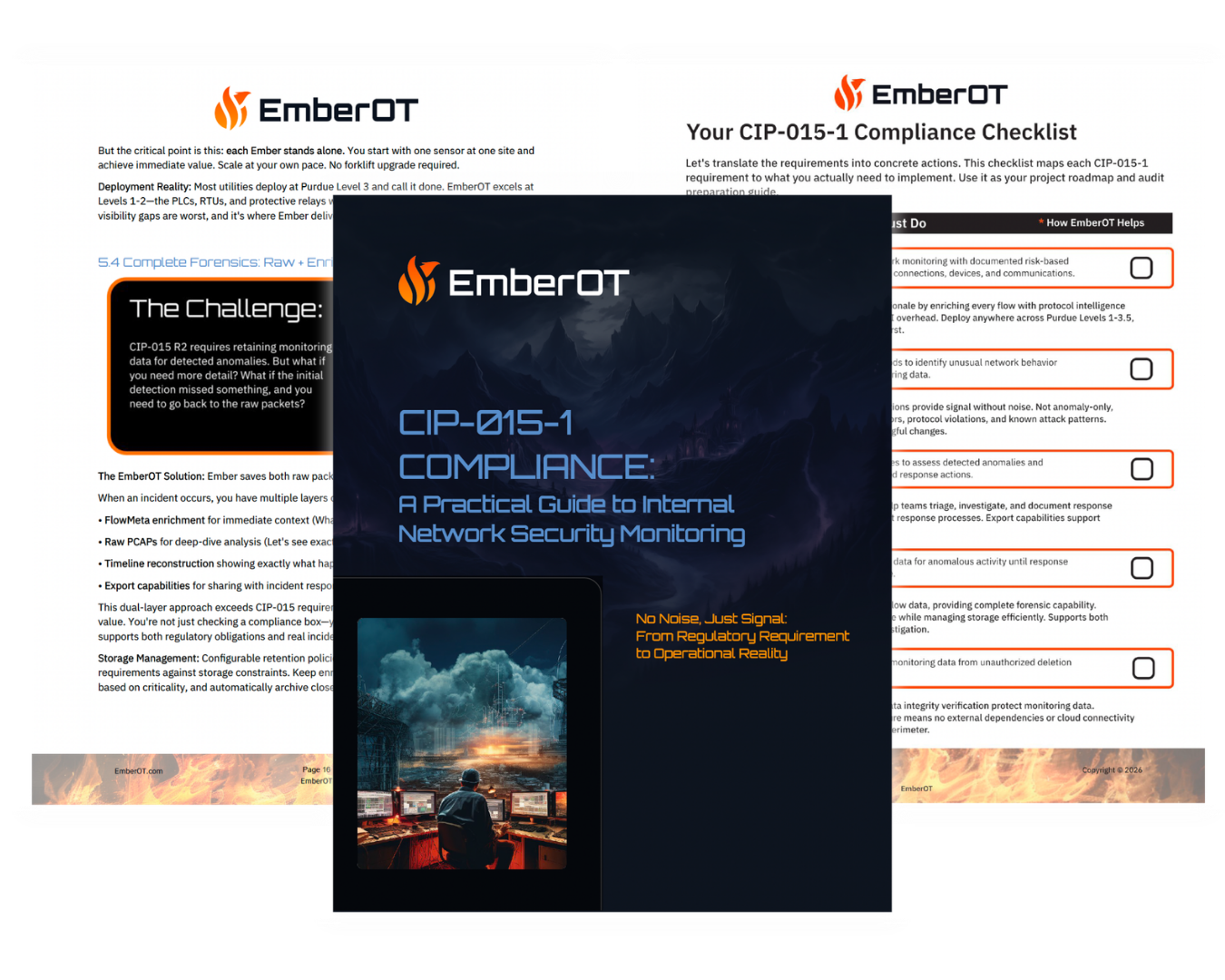
EmberOT created this guide to help critical infrastructure teams translate CIP-015 Compliance from a regulatory requirement into an operationally realistic program.
The goal is not just to explain the standard, but to help compliance, security, and operations stakeholders understand what internal visibility, anomaly detection, evaluation workflows, and defensible monitoring data look like in practice for OT environments.
CIP-015 Compliance Guide
EmberOT created this guide to help critical infrastructure operators understand CIP-015 and prepare for the internal network security monitoring requirements ahead. The guide explains what the standard requires, why it matters operationally, and how teams can move toward readiness with clarity and confidence.
- Clear explanation of CIP-015 Compliance requirements and timelines
- Practical guidance for internal network security monitoring and anomaly evaluation
- Key considerations for data retention and protection of monitoring evidence
- Actionable steps for planning, documenting, and operationalizing compliance readiness